
|
Formed in 1978 in the London suburb of Gloucestershire by guitarist and vocalist Nick Barrett, the fledgling band soon dropped "Zeus" from their name (it was considered too long to look cool on a T-shirt). They woodshedded and played few gigs before 1983, when Marillion emerged with Script for a Jester's Tear. Pendragon and their peers, Twelfth Night, Pallas, and Solstice, found hope in the fact that, despite almost uniformly negative reviews, Marillion resonated with punters so much they took over the pop charts. In 1983, due, partly to Marillion's success and mentorship (Pendragon opened some key shows for them), Pendragon's profile rose too. They won a minor spot at that year's Reading Festival. Based on that performance, they earned a session on the BBC Friday Rock Show. Further, Marillion's then-manager signed them to his own label, Elusive Records. The line-up had stabilized by the time they issued their 1985 debut album, The Jewel, around vocalist/guitarist Nick Barrett, bassist Peter Gee, drummer Fudge Smith, and keyboard player Clive Nolan. Pendragon recorded the live album 9:15 in 1986 and began to establish a continental fan base. European audiences proved enthusiastic, spawning a contract with the French M.S.I. label; nevertheless, the group was forced to form its own Toff label just to release material in England.
Pendragon lay dormant throughout the rest of the '80s, but returned in 1991 with their first studio album in five years, The World. The album earned a U.S. release in 1993, followed by The Window of Life. A deal with the Japanese Pony Canyon label in 1994 resulted in the reissue of the group's entire back catalog. They made their U.S. debut a year later at L.A.'s Progfest. The Masquerade Overture was issued in 1996. After the following year's Live in Krakow, the band began a long gestation period of writing and playing gigs to debut new material. They wouldn't release Not of This World until 2001, when it became their most commercially successful recording. In 2002, Pendragon released Acoustically Challenged as a trio with Barrett and Gee on guitars and vocals, and keyboards by Clive Nolan.
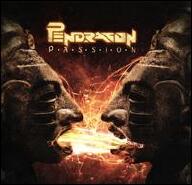
This marked the end of their pure prog pursuit for an extended period. Subsequent recordings, beginning with 2005's Believe, showcased a newfound, darker, harder, edgier sound, revealing the influence of prog and post-metal on Pendragon. Fudge Smith left in 2006 after a 20-year tenure. He was replaced by Joe Crabtree until 2008, and then Scott Higham. Interestingly, longtime fans didn't flee in droves over Pendragon's heavier direction. Instead, the band's shows attracted metal fans to their music. Pendragon explored their new dimension on subsequent albums such as 2011's Passion and 2014's Men Who Climb Mountains. Higham left the band in 2015 and was replaced by Jan-Vincent Velazco (Steven Wilson, Frost). Over the next three years, Barrett wrote and worked on demos with his bandmates. Pendragon entered the Sharlands Barn studio in late 2018 with producer Karl Groom. They later moved on to track at Thin Ice Studios with Groom handling production, mixing, and mastering. In early 2020, Pendragon re-emerged after a five-year break with Love Over Fear, a double-length album that showcased a return to melodic prog as their dominant sound with elements of harder rock and metal added for contrast and balance. ~ John Bush, Rovi



|
Download SoundHound
The only App that can give you results through singing and humming search!
|

|